 By Ezra Julia
Modern daily routines place relentless demands on the human body. Hours spent hunched over backlit keyboards, navigating congested commutes, and managing demanding work schedules inevitably leave their mark in the form of physical tension, dull headaches, digestive irritability, and shallow breathing. While many turn to pharmaceutical fixes or wait weeks for professional bodywork appointments, our bodies house an innate, accessible system of neurological and muscular relief that requires nothing more than your own two hands.
Acupressure is a non-invasive manual therapy rooted in the principles of Traditional Chinese Medicine that interfaces seamlessly with contemporary neuroanatomy. By applying deliberate, targeted pressure to specific anatomical landmarks, you stimulate mechanoreceptors, encourage local blood circulation, downregulate an overactive sympathetic nervous system, and trigger the release of endorphins. Integrating acupressure into your daily routine is not about mastering an esoteric discipline; it is about reclaiming practical physical literacy and learning how to calm your nervous system on demand.
The Biomechanics of Pressure and Neuromuscular Release
To appreciate how acupressure works, you do not need to adopt an entirely new worldview. While classical medicine describes these points as conduits along energetic meridians, modern biomedical science understands them through the lenses of myofascial trigger points, neurovascular bundles, and connective tissue planes.
Acupoints typically correlate with areas where nerve bundles penetrate muscular fascial sheaths or where connective tissue is exceptionally dense. When you apply firm, stationary pressure to one of these junctures, several physiological events occur simultaneously:
-
Interruption of the pain-spasm cycle: Sustained pressure creates a brief ischemic compression, temporarily reducing local capillary flow. When the pressure is released, a fresh wave of oxygenated blood flushes the tissue, washing away inflammatory metabolic byproducts like lactic acid and substance P.
-
Vagal nerve activation: Stimulating specific peripheral nerves sends afferent signals to the brainstem, prompting the autonomic nervous system to shift from a reactive fight-or-flight state into a restorative parasympathetic state.
-
Proprioceptive recalibration: Firm contact signals the central nervous system to reduce resting muscle tone, encouraging tight, chronically contracted fibers to lengthen and soften.
Understanding these mechanics demystifies the practice. Acupressure is not magic; it is applied biomechanics that interrupts chronic tension patterns before they solidify into chronic pain.
Essential Acupressure Points for Daily Relief
You do not need to memorize hundreds of points to experience real clinical benefit. Mastering five reliable, versatile locations gives you an effective toolkit for handling common daily complaints.
Large Intestine 4 (He Gu) for Headaches and Facial Tension
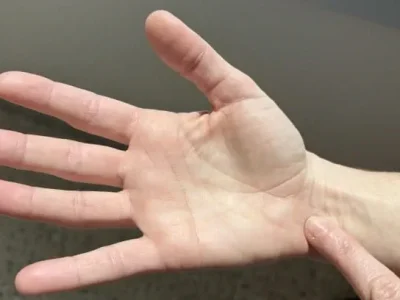
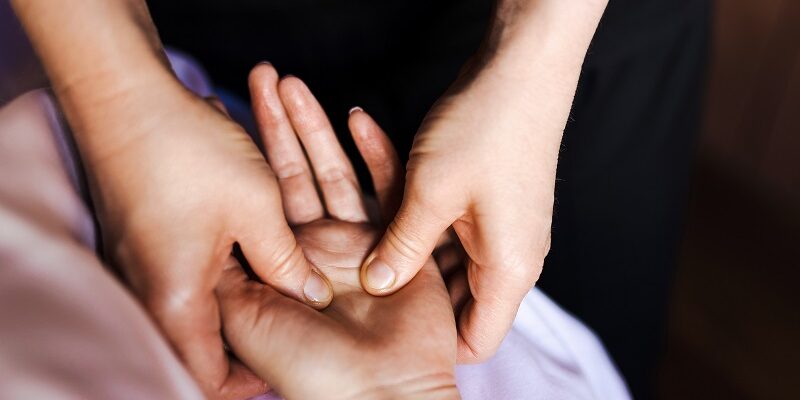
Located in the webbed muscular space between the thumb and the index finger, Large Intestine 4 is arguably the most famous point in the body. To find it, bring your thumb and index finger together; the point sits at the highest mound of the muscle on the back of your hand.
He Gu is the premier point for clearing tension from the head, face, neck, and jaw. If you suffer from tension headaches, clench your teeth during sleep, or carry stress in your temples after staring at screens, applying pressure here provides prompt relief. Use your opposite thumb and forefinger to grip the muscle, applying firm inward pressure toward the bone of your index finger.
Precaution: Because this point strongly stimulates downward physiological movement, it should be avoided entirely during pregnancy.
Pericardium 6 (Nei Guan) for Nausea and Restless Anxiety
Positioned on the inner forearm, Pericardium 6 sits approximately three finger-widths below the primary wrist crease, centered directly between the two prominent flexor tendons.
Nei Guan is globally recognized for subduing motion sickness, morning sickness, and nervous indigestion. Beyond digestive stabilization, it exerts a profound calming effect on the chest and cardiovascular rhythm. When work stress causes a fluttery, tight sensation in your chest or an upset stomach, apply direct, perpendicular thumb pressure while taking slow, deep diaphragmatic breaths for two minutes.
Gallbladder 20 (Feng Chi) for Desk Fatigue and Neck Stiffness
At the base of the skull, nestled in the soft depressions on either side of the thick neck musculature, lies Gallbladder 20. You can easily locate these hollows by sliding your fingers up the back of your neck until they slip under the occipital ridge.
Feng Chi is indispensable for office workers and drivers. Spending hours in a forward-head posture creates severe shortening of the suboccipital muscles, contributing directly to eye strain, brain fog, and occipital headaches. Interlace your fingers behind your head, place your thumbs into these twin hollows, and press upward and inward toward the center of your skull. Lean your head slightly back into your thumbs to amplify the release.
Liver 3 (Tai Chong) for Systemic Stress and Irritability
Located on the top of the foot, Liver 3 rests in the distinct depression between the first and second metatarsal bones, roughly two finger-widths back from the webbing of the toes.
In traditional frameworks, this point smooths erratic emotional stress and releases frustration. In modern terms, it works as a powerful grounding point that draws sympathetic tension down from an overstimulated head. If your mind is racing late at night or you feel internally agitated, sliding a firm thumb into this channel helps quiet mental chatter and settle physical restlessness.
Spleen 6 (San Yin Jiao) for Pelvic Ease and Restful Sleep
Found on the inner lower leg, Spleen 6 sits four finger-widths directly above the tip of the medial malleolus (the inner ankle bone), right behind the posterior border of the shinbone.
San Yin Jiao is a foundational point for evening relaxation, fluid balance, and abdominal comfort. It acts as an intersection for several neuromuscular pathways that regulate pelvic circulation and restorative sleep. Spend two minutes working this point before bed to help your body shed the physical residue of a demanding day. Like LI4, this point has potent downward moving properties and should be avoided during pregnancy.
Nuances of Technique: Pressure, Sensation, and Breath
The efficacy of self-acupressure depends heavily on how you apply the physical touch. Rushing through points with frantic rubbing rarely yields lasting results; the nervous system requires deliberate, patient signals to let down its guard.
Aim for what practitioners describe as the De Qi sensation—a distinct, deep ache that feels satisfying, slightly tender, or warm, often described as a “good hurt.” It should feel like a deep release rather than a sharp, bruising, or electrical sensation. If you feel sharp nerve pain, shift your finger a millimeter or two until you land in the surrounding muscle belly.
Apply pressure progressively. Start with light contact to prepare the local tissue, gradually sink deeper over ten to fifteen seconds, and hold a firm, steady depth for one to three minutes. You can hold completely still or execute tiny, stationary circular rotations with the pad of your thumb.
Pair every press with intentional breathing. Exhale slowly through your mouth as you press into the point, visualizing the tight muscle giving way under your finger. Inhale smoothly through your nose without releasing the physical contact. This breath-body synchronization activates the vagus nerve and encourages the muscle fibers to yield completely.
Safe and Responsible Application
Acupressure is inherently safe, but it requires common sense. Never press into areas with active skin infections, open wounds, significant bruising, recent surgical scars, or severe varicose veins. If you have an underlying bleeding disorder or take prescription anticoagulants, use gentle touch rather than heavy, localized force.
Acupressure is not an emergency medical intervention or a replacement for clinical care when addressing acute trauma or progressive illness. Instead, view it as an empowering, everyday maintenance ritual. By taking five minutes at your desk or before sleep to tune into your body’s pressure points, you actively dismantle physical tension before it escalates, cultivating a resilient, grounded state of physical well-being.
What is your reaction?
Excited
0
Happy
0
In Love
0
Not Sure
0
Silly
0