 By Ezra Julia
Walk onto any modern commercial gym floor, and you are immediately greeted by an intimidating landscape of mechanical complexity. Rows of selectorized weight machines, intricate cable towers, loaded barbells, and digital consoles suggest that building a capable physique requires an arsenal of specialized hardware. For beginners and experienced lifters alike, the implicit message is clear: real physical adaptation must be driven by external iron.
Yet watch those same lifters move outside the confines of fixed equipment, and a surprising pattern often appears. An individual who can push heavy loads on a seated chest press may struggle to complete ten strict push-ups without their hips sagging toward the floor. Someone capable of stacking plates on a leg-press sled may lose their balance during a set of walking lunges.
This disconnect highlights a fundamental truth of physical development: external resistance means very little if you cannot effortlessly manage your own mass against gravity. Calisthenics and bodyweight training strip away artificial stabilization, forcing the nervous system, musculature, and connective tissues to work in harmony. Before chasing heavier plates or exotic training splits, learning to master your own body builds the durable physical foundation upon which all other athletic achievements rest.
Relative Strength and the Reality of Movement Competence
Fitness metrics often prioritize absolute strength—the total amount of external weight a person can move, regardless of their body mass. While absolute strength has its place in powerlifting, everyday human life rewards relative strength: how effectively, efficiently, and safely you can move your own body through space.
When you train with bodyweight movements, you cannot rely on padded backrests or guided steel tracks to hold your posture in place. Every repetition requires acute neuromuscular coordination. In a standard pull-up, for example, your hands, forearms, lats, rhomboids, core, and glutes must fire in seamless unison to produce upward propulsion while preventing erratic swinging.
This total-body recruitment sharpens your proprioception—the sensory awareness of where your limbs are positioned in space. It teaches the brain how to recruit motor units cleanly, organize the skeletal structure under tension, and maintain structural integrity throughout an entire range of motion. Developing high relative strength creates a body that is not just aesthetically muscular, but physically competent, responsive, and agile.
The Biomechanical Protection of Closed-Chain Movement
From an orthopedic standpoint, bodyweight training relies predominantly on closed kinetic chain (CKC) exercises. In a closed-chain movement, the terminal limb (your hand or foot) is fixed against a stationary surface, and the body moves around that anchor point. Examples include push-ups, squats, pull-ups, and dips. In contrast, open kinetic chain exercises—like dumbbell bench presses or seated leg extensions—involve moving an external implement while the torso remains stationary.
Closed-chain exercises offer unique protective benefits for vulnerable joints:
-
Natural Scapular Movement: During a barbell bench press, your shoulder blades are pinned firmly against a flat bench, restricting their natural gliding rhythm. In a push-up, your scapulae are free to protract and retract naturally across the posterior rib cage, distributing stress evenly and dramatically reducing the incidence of rotator cuff impingement.
-
Co-Contraction of Stabilizing Muscles: Fixing your feet to the earth during a bodyweight squat or lunge activates the hamstrings and quadriceps simultaneously. This dual activation exerts a stabilizing compressive force on the knee joint, neutralizing the shear stresses often encountered on seated machine extensions.
-
Tendon and Connective Tissue Resilience: Calisthenics places consistent tensile demands on the fascia, ligaments, and tendons that surround joints. Because connective tissue remodels at a slower metabolic rate than vascular muscle tissue, mastering bodyweight progressions gives tendons time to thicken and adapt, building structural protection against future soft-tissue tears.
By prioritizing closed-chain mechanics, you reinforce the body’s natural anatomical architecture rather than forcing your joints to conform to the artificial trajectory of a gym machine.
How to Drive Progression Without Adding Weight
A frequent objection to calisthenics is the assumption that it cannot produce progressive overload once you can comfortably perform basic sets of fifteen or twenty repetitions. If you do not have heavier weights to add to the bar, how do you continue building strength and muscular density?
The answer lies in altering physics rather than adding mass. While weightlifting manipulates load, bodyweight training manipulates mechanical advantage and leverage.
Altering Mechanical Advantage and Center of Mass
You can make any exercise significantly more demanding simply by extending your lever arm or shifting your center of gravity. A standard push-up distributes roughly sixty-five percent of your body mass across your hands and feet. Elevate your feet onto a sturdy bench, and you increase the percentage of load transferred to your upper chest and shoulders.
Extend your hands farther out in front of your body or shift to unilateral variations—such as archer push-ups, single-arm push-up progressions, or pistol squats—and the mechanical demand skyrockets. Unilateral bodyweight work also instantly exposes and corrects asymmetrical strength imbalances between limbs, preventing the compensation patterns that frequently cause injuries under heavy barbells.
Manipulating Cadence, Tempo, and End-Range Holds
Another potent tool for stimulating muscular adaptation is controlling time under tension. Rushing through repetitions using momentum provides minimal neurological stimulus.
By contrast, executing a pull-up with a four-second eccentric descent, followed by a two-second dead-hang pause and an explosive pull, fundamentally transforms the exercise. Introducing isometric holds at the most mechanically challenging positions—such as pausing at the bottom of a deep dip or holding the bottom of a lunge an inch off the floor—teaches the nervous system to generate force where you are most vulnerable, building ironclad joint security.
The Core as an Active Kinetic Bridge
In conventional gym culture, abdominal training is frequently treated as an isolated vanity project, consisting of crunches or machine twists tacked onto the final ten minutes of a workout. Bodyweight training treats the core with far greater respect, recognizing it as the vital kinetic bridge that transfers force between the upper and lower halves of the body.
Every foundational calisthenics movement is, by definition, a profound core exercise. You cannot execute a proper push-up without maintaining an active hollow-body position, firing your transverse abdominis, rectus abdominis, and glutes to prevent your lumbar spine from hyperextending. You cannot complete a strict dip without engaging deep spinal stabilizers to eliminate torso wobble.
When your trunk musculature learns to brace dynamically against gravity during complex movements, you eliminate “energy leaks” throughout your kinetic chain. This active structural rigidity protects the intervertebral discs during everyday physical tasks, virtually eliminating the sudden lower back tweaks that plague so many desk-bound adults when lifting heavy furniture or yard debris.
Assembling the Foundational Bodyweight Framework
Constructing a solid physical foundation does not require an endless catalog of circus-style tricks or elite gymnastics routines. It requires consistent, disciplined practice across five fundamental movement patterns:
-
Horizontal Pressing: Master the standard push-up, ensuring full range of motion from locked-out elbows to chest-to-floor contact, before advancing to deficit push-ups, diamond variations, or elevated-foot progressions.
-
Horizontal Pulling: Inverted bodyweight rows—performed under a sturdy table, low gymnastics rings, or a waist-high bar—build the mid-back and rear deltoid strength needed to reverse rounded, desk-bound posture.
-
Vertical Pulling: Chin-ups and pull-ups build exceptional upper-body pulling strength and grip power. Beginners can bridge the gap using slow eccentric negatives and isometric top holds until full repetitions are accessible.
-
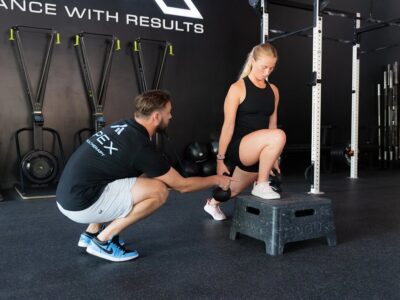
Lower-Body Mechanics: Progress from bodyweight air squats and static split squats to deep Cossack squats and single-leg step-downs to build knee integrity, adductor flexibility, and hip mobility across multiple planes.
-
Static Bracing and Midsection Control: Hollow-body holds, reverse planks, and side planks build the anti-rotational and anti-extension stability required to hold posture upright throughout the day.
A Lifetime of Portable, Honest Physical Capability
The beauty of building your foundation on bodyweight training is its enduring, democratic honesty. It requires no subscription, no specialized equipment, and no travel time to a designated facility. A floor, a doorway pull-up bar, and an open patch of ground are all the architecture you need to challenge your physical limits.
More importantly, the skills you cultivate through calisthenics—spatial awareness, joint resilience, relative strength, and active core stability—never expire. They serve as an impenetrable armor against injury whether you choose to transition into heavy Olympic weightlifting, run mountain trails, practice martial arts, or simply preserve your physical independence into your later decades. When you take the time to build a strong foundation from the inside out, you forge a body that is truly capable of moving through the world with grace, resilience, and unyielding confidence.
What is your reaction?
Excited
0
Happy
0
In Love
0
Not Sure
0
Silly
0